
Partition (politics)
Division of a unified territory into separate parts.

Rice muncher123 · CC0
Partition, in international relations, is the division of a previously unified territory into two or more parts. Scholars such as Brendan O'Leary distinguish partition from secession, noting that partition involves changes to political borders cutting through at least one territory considered a homeland by some community. Arie Dubnov and Laura Robson define partition as the physical division of territory along ethno-religious lines into separate nation-states.
- field
- International relations, political geography
- known_for
- Division of territories along ethno-religious lines into separate nation-states
- related_concepts
- Secession, ethnic separatism, national self-determination
Lore & Background
Dubnov and Robson locate partition in the context of post-World War I peacebuilding and the 'new conversations surrounding ethnicity, nationhood, and citizenship' that emerged from it. They argue that post-war agreements, such as the League of Nations mandate system, promoted a new political language of ethnic separatism as a central aspect of national self-determination, while protecting and disguising continuities and expansions of French and British imperial powers. After World War II, they contend, partition transformed from 'an imperial tactic into an organizing principle' of world diplomacy. Ranabir Samaddar agrees that partition gained prominence following World War I, particularly with the partition of the Ottoman Empire and the Dissolution of Austria-Hungary, resulting from competing national ambitions. By this point, he argues, ethnicity had become the primary justification of border proposals. Scholarship has closely linked partition to violence, with Dubnov and Robson emphasizing how partitions after Ireland contained proposals to transfer 'inconvenient populations' in addition to forcible territorial division, which had violent consequences for local actors tasked with carving out physically separate political entities and making them ethnically homogeneous. T.G. Fraser notes that Britain proposed partition in both Ireland and Palestine as a method of resolving conflict between competing national groups, but in neither case did it end communal violence; rather, partition merely gave these conflicts a 'new dimension'. A. Dirk Moses asserts that partition does not so much solve minority issues as deposit them into different containers, rejecting 'divine cartographies' that seek to neatly map peoples as naturally emplaced in their homelands for disregarding the heterogeneous reality of identity.
Reader's Guide
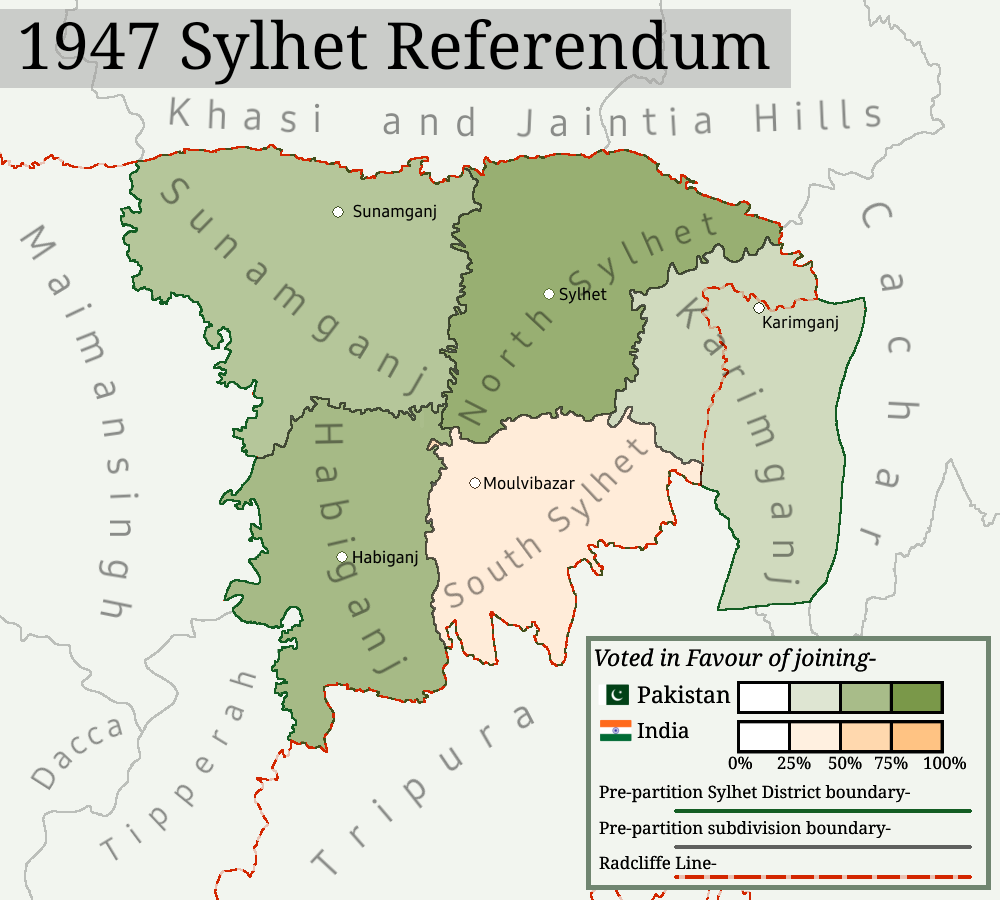
Partition remains a significant and contested concept in international relations, with a long history of application and debate. Arguments in favor include historicist views that partition is inevitable, a last resort to avoid genocide or large-scale ethnic expulsion, a cost-benefit improvement for conflict reduction, a promise of reduced violence and more stable homogeneous states, and the rigorous end that heterogeneity leads to problems. Arguments against include the loss of national territorial unity, the desirability of bi-nationalism and multi-nationalism, the impossibility of a just partition, difficulty in drawing new borders, the likelihood of disorder and violence, the failure of partition alone to achieve homogenization, and security issues within new states. Daniel Posner argues that partitions of diverse communities into homogeneous communities are unlikely to solve communal conflict, as boundary changes alter actors' incentives and give rise to new cleavages; for example, the creation of religiously homogeneous India and Pakistan created new social cleavages on lines other than religion. Posner writes that relatively homogeneous countries can be more violence-prone than countries with a large number of evenly matched ethnic groups. Historical examples span Europe, the Middle East, Africa, and Asia, including the partitions of Poland, Ireland, Palestine, and Bengal, among many others.
Did You Know?
- Brendan O'Leary distinguishes partition from secession by noting partition cuts through at least one territory considered a homeland by some community.
- Dubnov and Robson argue that after World War II, partition transformed from an imperial tactic into an organizing principle of world diplomacy.
- T.G. Fraser notes that Britain proposed partition in both Ireland and Palestine, but in neither case did it end communal violence; it merely gave conflicts a new dimension.
- Daniel Posner argues that relatively homogeneous countries can be more violence-prone than countries with a large number of evenly matched ethnic groups.
Historical Roots of the Linguistic Divide
The modern Belgian linguistic split did not emerge overnight but grew from centuries of layered political and cultural history. The territories that would become Belgium, the Netherlands, and Luxembourg originated as a patchwork of semi-independent fiefdoms loosely tied to both the French crown and the Holy Roman Empire. Crucially, these medieval borders rarely aligned with the boundary between Romance and Germanic speech, meaning many single fiefdoms contained both Francophone and Germanic populations. The ruling aristocracy, who often spoke yet other languages, largely ignored these disparities. Throughout this long transition, growing socio-economic gaps between the two linguistic communities deepened mutual resentment, laying the groundwork for the partition debates that persist today.
The Brussels Enigma and Minority Communities
Any realistic partition of Belgium must confront the thorny question of what happens to Brussels and the small German-speaking Community. Brussels holds a unique constitutional status: it is an autonomous bilingual region, geographically an enclave within the Flemish half of the country yet constitutionally a separate entity in which both the Flemish and French Communities exercise overlapping authority. Its bilingual mandate requires officials to serve citizens in either French or Dutch and to display street names in both languages, yet it cannot establish a bilingual school because education falls exclusively under one community or the other. The city maintains strong economic links with surrounding Flanders, and many Dutch-speaking residents commute across the border. Neither group has a clear home in a two-state partition, making them persistent sources of political friction.
The Double Party System and Coalition Crises
Since the 1960s, Belgium has reorganized its governance into separate linguistic regions, granting both the Flemish and French-speaking communities substantial autonomy within the federal structure. This arrangement, while intended to protect each group, has produced a uniquely complex political landscape. In addition to the conventional left-right spectrum, every national election now carries a linguistic dimension, effectively creating a double party system. Forming a governing coalition therefore requires not only ideological compromise but also cross-linguistic agreement, a hurdle that has repeatedly stalled government formation. Compounding the difficulty was the unresolved status of the Brussels-Halle-Vilvoorde electoral district, a mixed-language constituency whose boundaries have long been a flashpoint. The simultaneous rise of extremist political parties on both sides of the linguistic divide injected further instability and gave new momentum to partition rhetoric. Residents of minority communities in and around Brussels and along the language border have voiced concerns that they are systematically underrepresented in local governance and public services, adding another layer of grievance to an already fragile political equilibrium.
Public Opinion, Rival Visions, and the European Question
Despite the intensity of political debate, a clear majority of Belgians still favor keeping the country united. Adjusting for those without an opinion, roughly 31 percent favored a split and 69 percent did not. Notably, the survey was limited to the Flemish province of Limburg, an area considered less nationalist than Antwerp Province, suggesting support may be higher elsewhere. Unitarists point to the monarchy, robust national institutions, and the geopolitical significance of Brussels as forces holding the federation together. Separatists counter that these same elements, along with the country's considerable public debt, are merely obstacles delaying an inevitable separation. Beyond Belgium's borders, the debate carries broader implications. Some political observers warn that a Belgian split could deal a blow to the European Union's ideal of diverse cultures cooperating within a single political framework. Alternative visions, such as the Greater Netherlands movement advocating Flanders' union with the Netherlands or the Rattachist idea of Wallonia joining France or Luxembourg, further illustrate how Belgian unity remains entangled with wider European identity.
Gallery
Frequently Asked Questions
What is Partition (politics)?
In international relations and political geography, partition describes the act of splitting a previously unified territory into two or more separate political units. It most often involves redrawing borders along ethno-religious lines so that distinct communities become their own nation-states.
How does partition differ from secession?
Secession is one group breaking away from a larger state, whereas partition reshapes borders on both sides of the divide, cutting through at least one territory that a community considers its homeland. Brendan O'Leary points out this key distinction: partition changes the political geography of multiple communities simultaneously rather than just one.
What are the defining features of partition?
Partition involves the physical division of a single territory along ethno-religious boundaries into separate nation-states. As Arie Dubnov and Laura Robson explain, it is not merely an administrative reorganization but an actual redrawing of borders that cuts through shared homelands.
Which scholars are most associated with partition theory?
Brendan O'Leary is widely cited for clarifying how partition differs from secession in political geography. Arie Dubnov and Laura Robson have also shaped the discourse by framing partition specifically as the physical splitting of territory along ethno-religious lines.
Why is partition significant in the study of international relations?
Partition sits at the crossroads of national self-determination, ethnic separatism, and political geography, making it essential for understanding how states form, fragment, and reorganize. It gives scholars a framework for analyzing what happens when shared homelands are divided by new political borders.
More in Legal Concepts And Doctrines 1-19
Spotted an error? Know more?
This is a living reference — every entry is fact-audited, and reader corrections feed straight into our audit queue. Suggest an edit · See this site's audit record